Systems Literacy
Learn how power hides in plain sight: in schools, laws, families, media, healthcare, housing, work, and the stories we’re told are “normal.”
What is Systems Literacy?
Systems literacy is the ability to see the blueprint of power. Most of us were conditioned to believe that when we struggle, we are the problem. Systems literacy flips the script. It is about pattern recognition, repair, and action. Moving past surface-level takes time to audit the predatory architecture built around us.
When you develop systems literacy, you stop looking at social issues as a random menu of independent struggles and start recognizing how the machine operates as a whole. It is the language, history, and practical strategy required to see the design, map the overlaps, and fight back.

To dismantle a system, we have to stop treating structural oppression like simple interpersonal nastiness. Systemic oppression is not just "someone was mean to me and hurt my feelings." That's just interpersonal prejudice.
Systems are daily, recurring, institutionalized patterns that center, prioritize, and protect dominant groups at the expense of everyone else. They are built directly into our earliest legal, economic, and political structures. A system doesn't need "bad people" manually turning the crank every day to keep running; it is automated by design.
According to researchers Steven O. Roberts and Michael T. Rizzo, this foundational machine is kept running by seven distinct psychological and social factors:
-
Categories: Organizing people into distinct groups to promote essentialist reasoning.
-
Factions: Triggering ingroup loyalty and perceived external threats.
-
Segregation: Denying meaningful contact to harden biased perceptions.
-
Hierarchy: Emboldening people to preserve dominance through their everyday behavior.
-
Power: Legislating and institutionalizing biases on both micro and macro levels.
-
Media: Legitimizing idealized representations of the dominant group while minimizing others.
-
Passivism: Overlooking or denying the system's existence, allowing it to fester and persist.
When we stay quiet because the conversation is uncomfortable, our passivism actively feeds the machine.
Why systems aren't just “bad people doing bad things.”
Related Blogs


How racism, patriarchy, ableism, class, and queerphobia overlap
The United States utilizes a foundational blueprint that engineered laws, labor, land, and public definitions of what's considered "normal." This architecture taught the culture how to rank human worth. Once a society normalizes the logic that one group of humans is inherently more valuable, safe, and logical than another, that exact same ranking logic gets copy-pasted across every other axis of oppression.
Here's how these interlocking systems overlap and feed into one another:
The Intersection of Racism and Queerphobia
While LGBTQ+ youth of color form their identities and achieve self-acceptance at the exact same rate as their white peers, they do not inherit the same world. They bear a twin burden: structural discrimination drives massive disparities in housing instability, healthcare barriers, and mental health crises. True queer liberation cannot exist when a person's physical safety and mental well-being are still dictated by the racial climate of the zip code they walk through.
Weaponizing the Spectrum: Racism and Ableism
The exact same neurodivergent traits are interpreted entirely differently based on skin color.
-
The Diagnosis Gap: BIPOC individuals are significantly less likely to be diagnosed with autism or ADHD early, blocking access to vital support services.
-
Support vs. Punishment: When a white autistic student experiences sensory overload, they are likely to receive grace and accommodations. When a BIPOC peer exhibits the exact same behavior, they are routinely perceived as defiant or dangerous.
-
The School-to-Prison Pipeline: By criminalizing traits rather than accommodating them, the system disproportionately subjects BIPOC neurodivergent students to physical restraint, suspension, and isolation.
Class, Housing, and Education
If you care about kids and public education, you have to care about housing history. The state of modern public education is a direct loop of historical design:
HISTORICAL REDLINING
depressed property values
underfunded schools
Because school funding is tied to local property taxes, lower-income communities of color are systematically funneled into under-resourced schools. This architecture intentionally cuts off access to counselors, updated materials, and support systems.
Patriarchy and Bodily Control
The erosion of reproductive autonomy is a direct consequence of political moral extremism designed to control bodies. For decades, regressive policies capitalized on a strategic void by framing basic healthcare as an inherent sin. Reclaiming this narrative requires shifting from defensive, legalistic arguments to an explicitly moral framework of human rights.
Everything I Talk About Is Connected, Unfortunately
The Lesbian Agenda Project evolved because it had to. This isn't just about one identity; it is about who gets erased, who benefits from that erasure, and how we build a world where no one has to beg to be recognized as real.
Lesbian history, trans rights, neurodivergence, child advocacy, education, and parenting are the exact same beast wearing different masks. They are all shaped by systems designed to control bodies, erase histories, dismiss pain, and treat human dignity as a conditional privilege. You cannot look at one thread without pulling on the rest.
The Moral Panic Machine
"Protect the children" is the ultimate political blank check. It sounds noble, urgent, and unassailable—which makes it the perfect psychological trap.
The moral panic fallacy is the dangerous illusion that widespread media outrage and sudden legislative crackdowns are organic responses to a rising threat, rather than engineered strategies designed to consolidate power while shifting the legal and cultural landscape behind your back.
The machine operates using a highly predictable, four-step playbook:
-
Identify and Label the 'Folk Devil': A vulnerable minority group or cultural shift is singled out as a scapegoat representing a broader societal anxiety.
-
Amplify Through the Media Megaphone: Media channels engage in intense repetition and stereotyping, triggering a loop that blows minor incidents out of proportion.
-
Mobilize the Moral Barricades: The public responds with organized outrage, creating intense social solidarity among the dominant group against a fabricated enemy.
-
Impose Control and Restructure Rules: Politicians step in to "restore order" by passing restrictive laws, expanding surveillance, and criminalizing everyday behavior.
"The notion of interest convergence is often criticized for being overly pessimistic because it notes that the racial norm in the United States isn’t steady progress, but a repressive equilibrium of white dominance. By mischaracterizing critical race theory, conservatives are hoping to ensure interest divergence."
— Sociologist Victor Ray
Who Benefits from the Panic?
-
Politicians: Forcing a crisis mobilizes voters and serves as a highly effective distraction from real structural failures like economic stagnation or crumbling infrastructure.
-
The Media Ecosystem: Manufactured outrage drives massive engagement and subscription revenue, while legacy institutions validate the panic's core premises under the guise of "neutral observation."
-
State Institutions: Terrified citizens willingly surrender civil liberties, resulting in expanded surveillance budgets, harsher criminal codes, and increased institutional power.
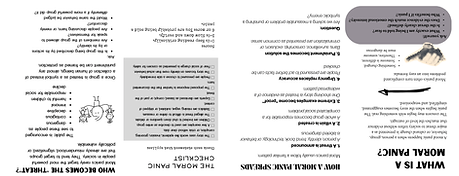
Moral Panic Decoder–Mini Zine
Let's turn rage into repair by building practical, actionable tools to help you strip the machine of its power. I'll be launching the a robust Moral Panic Decoder Toolkit soon! UPDATE: First asset is COMPLETE! Check out the downloadable Moral Panic zine pdf here >>
In the meantime, the next time you see a sensationalized news story or an urgent legislative push to "protect the children," pause, step back, and run it through this four-question analytical checklist:
-
Which children are actually being protected? Are we protecting all children, or are we protecting the comfort of dominant groups at the direct expense of marginalized kids?
-
Who is identified as the "folk devil"? Is a vulnerable minority group being used as a scapegoat for a much larger, complex societal anxiety?
-
What concrete outcomes does this panic produce? Does this issue result in genuine support for families, or does it simply lead to censorship, book bans, and a loss of civil rights?
-
Who ultimately gains power and profit? Which politicians are raising campaign funds off this issue, which media outlets are gaining clicks, and which state systems are expanding their authority?
Real protection for children doesn't look like censorship, isolation, or state control; it looks like resources, equity, and the freedom to exist safely in the world.
Moral Panic Resources
Moral Panic Mini Zine